
College Football 27 Guide: 15 Key Gameplay Changes and How to Take Advantage of Them
Summary
College Football 27 focuses on deeper gameplay systems, expanded strategic control, and a more authentic college football experience. From defensive overhauls to improved career progression, understanding these changes early can help players perform better in Dynasty Mode, Road to Glory, and online competition. Players building Ultimate Team rosters should also manage CUT 26 Coins efficiently to support long-term progression.
Defense Plays a Bigger Role Than Ever
One of the largest gameplay changes in College Football 27 is the complete overhaul of defensive systems. Defensive playbooks have expanded significantly, giving players more scheme variety and allowing teams to better reflect their real-world counterparts.
Success on defense now relies more heavily on reading offensive formations and making pre-snap adjustments. Rather than simply reacting after the snap, players should focus on identifying likely run lanes, coverage mismatches, and quarterback tendencies before the play begins.
The improved coverage logic also rewards disciplined positioning. Players who manually control linebackers and safeties can create turnovers more consistently than in previous versions.
Master the New Short-Yardage Battles
Goal-line situations and third-and-short scenarios have received major attention this year.
Before the snap, the game evaluates offensive push strength against defensive resistance, creating more realistic outcomes during quarterback sneaks and power runs. Timing is now a critical factor rather than a simple animation trigger.
When facing short-yardage situations:
Watch defensive alignment carefully.
Use the QB sneak meter effectively.
Consider home-field advantage and momentum effects.
Avoid rushing snap timing under pressure.
Small mistakes can now determine whether a drive continues or stalls.
Learn the Updated Offensive Line Controls
College Football 27 introduces greater control over blocking assignments and protection schemes.
The improved ID Mike system allows players to identify defensive threats more accurately. Offensive lines can now be adjusted to prioritize specific defenders, helping neutralize dangerous pass rushers.
Before every important passing play:
Identify blitz threats.
Adjust protection assignments.
Shift blocking if necessary.
Utilize chip blocks against elite edge rushers.
These adjustments become increasingly important in higher difficulty settings and competitive online play.
Use Defensive Aggression Strategically
Defensive players now have more control over gap integrity and aggression settings.
Conservative settings improve run defense discipline but may reduce pursuit speed. Aggressive settings increase pressure potential but can create larger running lanes if defenders abandon assignments.
Against run-heavy opponents, maintaining disciplined gap control is usually the safer option. Against pass-heavy offenses, increased aggression can create sacks and hurried throws.
Balancing risk and reward becomes a central part of defensive strategy.
Build Custom Adjustments Before Kickoff
Custom Adjustments may be one of the most impactful additions for experienced players.
The system allows users to save offensive and defensive setups for quick access during games. Instead of navigating multiple menus before each snap, preferred adjustments can be activated instantly.
Since only a limited number of presets can be brought into a game, preparation becomes important.
Before entering a season or online matchup:
Create pass-defense packages.
Build run-stopping formations.
Save blitz configurations.
Prepare offensive protection setups.
This preparation can significantly improve reaction speed during critical situations.
Improve Tackling Efficiency With the Tackle Stick
Defensive tackling has become more skill-based thanks to the new Tackle Stick mechanic.
Different tackle types are now tied directly to right-stick inputs, allowing players to choose the appropriate tackle for each situation.
When approaching ball carriers:
Use conservative tackles in open space.
Use aggressive tackles near the sideline.
Avoid overcommitting against elusive runners.
Learning these inputs early can reduce missed tackles and improve overall defensive consistency.
Understand the Smarter Ball Carrier AI
AI-controlled runners now use machine-learning-based decision making.
Ball carriers identify cutback lanes more effectively, react to defensive leverage, and make smarter decisions in open space.
This means traditional defensive strategies may not always work. Pursuit angles become more important, and overcommitting to one side of the field can be punished quickly.
Defenders should focus on containing space rather than simply chasing the ball.
Take Advantage of Timing-Based Catching
The new timing-based catching system adds more control to the passing game.
After throwing the ball, players choose among several catch types:
Aggressive Catch
Possession Catch
Run After Catch
Perfect timing increases the likelihood of a successful reception, while poor timing can result in drops or contested outcomes.
For consistent results:
Use possession catches in traffic.
Use aggressive catches in one-on-one situations.
Use run-after-catch options when targeting receivers in open space.
This system rewards player skill rather than relying solely on ratings.
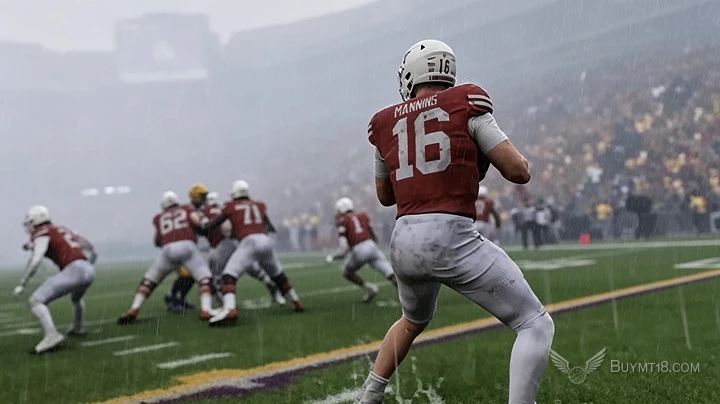
Monitor Dynamic Weather Conditions
Weather now changes dynamically during games.
Rain may stop midway through a contest, while snow can arrive unexpectedly and alter field conditions.
These changes affect:
Passing accuracy
Ball security
Player movement
Stamina consumption
When weather deteriorates, shifting toward a balanced or run-heavy offense often produces more consistent results.
Road to Glory Requires Long-Term Planning
Road to Glory places greater emphasis on career management and player development.
New positions have been added, including:
Tight End
Edge Rusher
Free Safety
Player potential is no longer fixed. Decisions throughout a career influence development paths, future ratings, and professional prospects.
Managing weekly progress becomes just as important as performing well on game day.
Develop Your High School Prospect Carefully
The journey now begins with a more detailed high school experience.
Strong performances increase scholarship opportunities and improve future recruiting outcomes. Poor performances can affect long-term development and draft projections.
Players should focus on consistent growth rather than attempting high-risk plays every game.
The recruiting process feels more connected to career progression than in previous installments.
Online Play Rewards Difficult Challenges
Road to College Football Playoff introduces a revised ranking structure.
Victories are no longer valued equally.
Important factors include:
Opponent quality
Team tier differences
Home versus away games
Conference challenges
Defeating a stronger team with a weaker program provides substantially greater ranking rewards than beating lower-ranked opponents.
Players seeking faster progression should not avoid difficult matchups.
Playoff Progression Feels More Authentic
Postseason play now features a stronger sense of progression.
As teams advance through major bowl games and playoff rounds, presentation quality and atmosphere increase accordingly.
Reaching venues such as the Rose Bowl or Orange Bowl creates a more meaningful sense of achievement before eventually competing for the national championship.
This structure helps the postseason feel like a true culmination of an entire season's effort.
Mascot Mashup Offers a Different Experience
For players looking for a less competitive mode, Mascot Mashup provides an alternative.
Teams of mascot characters compete using the same core gameplay mechanics while emphasizing accessibility and entertainment.
Although lighter in tone, the mode still offers opportunities to improve fundamental gameplay skills and earn rewards.
Managing Resources and CFB 26 Coins Efficiently
While mastering gameplay mechanics is important, long-term team building also depends on resource management. Players participating in Ultimate Team modes should prioritize earning and spending CFB 26 Coins efficiently.
Focus on:
Completing seasonal objectives.
Participating in competitive events.
Targeting roster upgrades that fill specific weaknesses.
Avoiding unnecessary spending on short-term improvements.
Efficient use of CFB 26 Coins allows players to maintain roster depth while preparing for future content updates and challenges.
Conclusion
College Football 27 focuses heavily on player control, strategic decision-making, and realistic game flow. The revamped defensive systems, improved blocking controls, timing-based catching, dynamic weather, and expanded career modes all encourage a deeper understanding of football fundamentals. Players who learn the new mechanics early, prepare custom adjustments before games, and manage resources such as CFB 26 Coins carefully will be better positioned to succeed across Dynasty, Road to Glory, Ultimate Team, and online playoff competition.